Irish Pub NYC Traditions That Keep Guests Coming Back
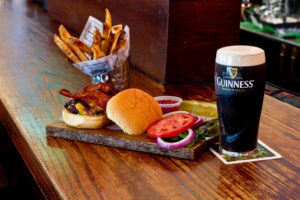
Walk into a truly good Irish pub in New York and the first thing you notice is not the decor. It is the feeling that the room already knows what it is. The bartender is moving with purpose, the regular at the corner stool is halfway through a quiet conversation, and the sound in the room carries a certain warmth, even before the first pint lands on the bar. That atmosphere is hard to fake, and harder still to sustain in a city where concepts come and go with the seasons.
The best Irish Pub NYC spots do not rely on novelty. They rely on tradition, but not in a museum-piece way. These traditions work because they shape how people are greeted, served, remembered, and folded into the life of the room. Some are obvious, like the quality of a Guinness pour or the presence of live music. Others are less visible, like how a bartender handles a crowded second round on a Friday, or how a pub keeps the neighborhood crowd comfortable even when tourists fill half the floor.
In my experience, the places that keep guests coming back year after year understand something simple: tradition is not nostalgia for its own sake. It is a service model. It gives people reliability in a city that rarely slows down.
The welcome starts before the first drink
A strong Irish pub does not make people earn their comfort. That begins with the greeting, which sounds basic until you see how often busy bars get it wrong. In many places, guests step in, look around, and feel immediately like they are in the way. In a proper pub, someone makes eye contact fast. If the room is packed, the acknowledgment matters almost as much as the service itself.
That small gesture has real staying power. Guests forgive a wait when they know they have been seen. They settle in differently. They are more patient, more open, and more likely to return because the first impression was not transactional.
This is one of the oldest pub traditions, and it translates especially well in New York. The city can be anonymous. A pub cuts through that by making even first-timers feel expected. It does not need to be theatrical. Often it is just a nod from behind the stick, a host who says they will have a table in ten, or a server who remembers to come back exactly when promised. Reliability builds trust. Trust builds regulars.
The bar itself is part of the ritual
There is a reason so many Irish pubs center the room around a substantial bar. It is not just about maximizing service positions. The bar is the social engine. It invites solo guests without making them feel isolated, and it allows for the kind of casual conversation that is difficult to manufacture in trend-driven spaces built around photo moments.
A well-run pub bar has a particular rhythm. Guests can stay for one pint or four. They can read the paper, watch the match, catch up with a friend, or end up in conversation with the person two stools down. That flexibility is central to why people come back. The room offers permission to use it in different ways on different days.
In New York, where many hospitality concepts push customers toward a narrow experience, this matters more than owners sometimes admit. People return to pubs because the format is forgiving. A guest can come in wearing office clothes after work, or a winter coat and boots after a long walk, and neither feels out of place. Good pubs absorb the city as it is.
Guinness is more than a menu item
No discussion of Irish pub traditions is complete without talking about Guinness, though not because of romantic marketing. In a serious pub, the Guinness program says a great deal about the operation behind the scenes. Clean lines, properly maintained gas, fresh stock rotation, correct glassware, and patient pouring all signal discipline. If a pub cannot be bothered with those details, guests usually notice, even if they cannot name the issue precisely.
People often reduce the ritual to the two-part pour, but the deeper tradition is consistency. A pint should taste the way it is supposed to taste on a Wednesday at 4 p.m. And again on a Saturday night three rows deep. That does not happen by accident. It comes from training, systems, and pride.
In a competitive Irish Pub NYC landscape, this is one of the clearest separators. New Yorkers are experienced drinkers. Tourists may be there for the idea of the pint, but locals come back for execution. A great Guinness pour becomes part of a pub’s reputation because it reflects standards across the board. If they care that much about one pint, guests assume, often correctly, that they care about the rest of the experience too.
Bartenders who remember people, not just orders
Hospitality people talk a lot about personalization, but pubs have practiced it for generations without turning it into a slogan. The bartender who remembers a name, a usual drink, a preferred seat, or even the fact that someone switched from whiskey to tea last time because they had a train home, is practicing one of the most durable traditions in the business.
The important thing is that it feels human, not performative. Guests know the difference immediately. Forced familiarity can feel invasive. Genuine memory feels like belonging.
This has practical effects beyond warmth. Regulars spend more time in places where they do not have to explain themselves every visit. They bring friends. They stop in for one and stay for dinner. They choose that pub as a meeting place because they trust the room to take care of whoever they bring through the door.
I have seen pubs survive brutal rent cycles and neighborhood changes largely because they built this kind of memory into service. People did not just like the bar. They felt known there, which is a far more durable loyalty than preference.
Music that supports the room instead of overwhelming it
Live music is one of the most recognizable Irish pub traditions, but the strongest operators understand that the point is not simply to book musicians. The point is to shape the room. There is a real craft to knowing when a fiddle session will deepen the atmosphere and when it will push diners out the door.
Good pubs get that balance right. Music belongs in the room, but it should not flatten every other part of the experience. Early evening sets may invite conversation. Later sessions can raise the energy once tables have settled and people are ready to linger. The repertoire matters too. Guests appreciate authenticity, but they also appreciate range and restraint. Not every crowd needs a singalong at full volume.
This is where experience shows. A pub that treats music as a living tradition rather than background entertainment usually earns stronger loyalty. Guests feel the difference between a room with a real cultural pulse and one using music as set dressing.
Food that respects the occasion
The menu in a successful Irish pub does an interesting job. It must satisfy guests who want comfort and familiarity, and it must also hold its own in a city with serious dining standards. That is not always easy.
The pubs that last do not usually overreach. They understand their identity. A good shepherd’s pie, fish and chips with a properly crisp batter, a rich beef stew on a cold evening, a sharp cheddar burger that arrives cooked as ordered, these matter because they support the purpose of the pub. Food gives the room staying power. It turns a quick drink into a longer evening.
There is a common mistake here. Some pubs try to modernize by abandoning their Irish bar NYC core menu in favor of generic upscale bar food. Others cling so hard to tradition that quality slips behind the excuse of comfort. The best places avoid both traps. They keep recognizable staples and execute them well. They may also add seasonal dishes or local influences, but without losing the pub’s center of gravity.
New York guests respond well to that honesty. They do not need a pub to become a tasting menu restaurant. They need it to serve food with care, consistency, and enough substance to anchor the night.
The role of sport, and the fine line that comes with it
Televised sport is woven into the life of many Irish pubs, whether it is Premier League mornings, Gaelic games, rugby, or a major boxing card. This tradition can be a powerful draw, but it requires judgment. A pub that leans too far into the sports-bar model risks losing the mixed, welcoming atmosphere that makes a pub appealing to a broader audience.
The strongest rooms treat sport as one layer of identity, not the entire identity. Matches matter, and on certain days they define the room. But outside those moments, the pub still needs to function as a place for lunch, dinner, dates, family gatherings, and neighborhood drop-ins.
That flexibility keeps guests returning across occasions. Someone who comes for a Saturday morning football match may come back midweek for stew and a quiet pint if the room allows both experiences to exist credibly. That is the sweet spot.
Rituals around the calendar still matter
Seasonal traditions remain some of the biggest loyalty drivers in the pub world. St. Patrick’s Day gets the attention, naturally, but it is only one piece of the picture. The most successful pubs build a calendar that regulars can count on. Holiday sessions, community fundraisers, winter whiskey tastings, summer evenings with doors open and lighter fare, these repeated moments become part of people’s routines.
Tradition works because anticipation works. Guests return not only for what a pub is today, but for what they know it will become at a certain time of year. Memory and expectation reinforce each other.
That said, there is a trade-off. High-profile days can create operational strain and attract crowds who are not there for the pub’s usual character. Good operators prepare for that. They protect service standards, staff appropriately, and Irish Pub NYC avoid turning landmark dates into chaos that alienates core regulars. A packed house is not automatically a successful one. If long-time guests cannot get a fair drink or a place to stand comfortably, the short-term sales spike may cost long-term loyalty.
Community is not a buzzword in a pub, it is the product
Many businesses claim to build community. Pubs, at their best, actually do it. They host after-work decompression, first dates, wake gatherings, birthday toasts, job celebrations, and quiet solitary evenings that somehow never stay solitary for long. They become shared territory.
That role carries responsibilities. Staff need to read people well. They need to know when to chat and when to give space, when to cut someone off cleanly, when to welcome a new face into the banter, and when to protect a regular’s privacy. Those are not glamorous skills, but they are central to keeping the room healthy.
There is also a neighborhood dimension. A pub that supports local teams, knows nearby business owners, and treats local residents as the backbone of the house usually lasts longer than one built entirely around destination traffic. Tourists are valuable, especially in Manhattan, but neighborhood loyalty is what steadies the room in January, on rainy Tuesdays, and during economic soft patches.
Design details that quietly do heavy lifting
People often talk about woodwork, mirrors, old signage, and stained glass when describing a classic Irish pub. Those details matter, but mostly because of what they do psychologically. They soften a room. They absorb noise. They make time feel less hurried. In a city full of bright, hard, highly exposed spaces, that kind of visual and acoustic comfort is not trivial.
A well-designed pub invites a long stay. Seating should allow for different postures and different kinds of visits. Bar stools for the solo guest, small tables for two, larger areas for family or group meals. Lighting should flatter faces and make the room feel alive without forcing everyone into spotlight conditions. Music levels should allow speech. Sightlines to the bar should be clear enough that guests know how service works.
These details are easy to overlook because when they are done right, they disappear into the experience. Yet they are often the reason one pub feels instantly right and another feels tiring after twenty minutes.
The staff culture shows up in every tradition
Guests do not always see the internal culture of a pub, but they feel its effects. Irish pub traditions only endure when staff turnover is manageable, training is serious, and standards are shared. A bartender cannot remember regulars if the team changes completely every few months. A kitchen cannot produce comforting consistency if systems are loose and communication is poor.
The best pubs usually have a few signs of a healthy internal culture. Staff seem to help each other naturally. The floor and bar move in sync. New team members pick up the house style without sounding scripted. Managers are visible but not hovering. Problems get solved quickly and without public drama.
That kind of operational maturity is a tradition in itself. Many family-run or long-held pubs in New York have passed these habits down over years, sometimes decades. Even when ownership changes, the places that keep guests tend to preserve that backbone rather than erase it.
Why regulars return, and why newcomers stay
When you strip away the sentiment, guests come back to Irish pubs for a few practical reasons. They know what kind of evening they are likely to have. They trust the drinks. They trust the room. They trust the people running it. That trust gives the pub a rare advantage in a market crowded with options.
The best part is that tradition does not exclude newcomers. Quite the opposite. A pub with strong habits is often easier for a first-time guest to enter because the social rules are clearer. Order here, wait there, sit if you see an opening, stay as long as you like, no need to posture. The room teaches you quickly.
That is one reason the category remains resilient. Trends in hospitality tend to chase surprise. Pubs trade in recognition. Not sameness, but recognition. A good pint, a warm room, competent staff, steady food, music with a pulse, and a sense that you are not being rushed out the door the moment the check lands. Those qualities do not go out of style.
What the strongest Irish pubs in New York understand
At their core, the enduring traditions of an Irish Pub NYC institution are not decorative. They are structural. They shape how service feels, how time passes, and how strangers become regulars. Owners sometimes spend heavily chasing atmosphere when what guests are really looking for is coherence. Does the place know itself? Does it deliver on the same promise every time? Does the staff make room for people to return as themselves?
When the answer is yes, loyalty follows. Not because the pub is trendy, and not because it staged authenticity for the room, but because it offered something increasingly valuable in the city: steadiness with character.
That is why these traditions keep working. They are built around human behavior that has not changed much at all. People want a place where the welcome is real, the pint is right, the noise is lively but not punishing, the meal is satisfying, and the room holds them comfortably whether they came to celebrate, recover, or simply pass an hour well. A great Irish pub delivers that without fuss. Guests notice, and then they come back.
Hibernia Bar
401 W 50th St
New York, NY 10019, United States
Phone: +1 212-969-9703
FAQ About Irish Pub NYC
What is the best Irish pub in NYC?
The best choice depends on your location and preferred atmosphere. Hibernia Bar is a neighborhood Irish pub in Hell's Kitchen offering Guinness, Irish whiskey, pub food, and sports viewing.
Where do Irish people go in NYC?
New York's Irish community gathers in many neighborhoods and venues. Hibernia Bar welcomes Irish expats, local residents, and visitors at 401 W 50th St, just off Ninth Avenue.
Where can I watch GAA games in New York?
Hibernia Bar lists GAA among the sports it shows. Call +1 212-969-9703 to confirm coverage and opening times for a particular match before visiting.
What is the difference between a bar and a sports bar?
A sports bar emphasizes televised games and a shared viewing atmosphere. Hibernia combines sports viewing with the food, drinks, and hospitality of a neighborhood Irish pub.